
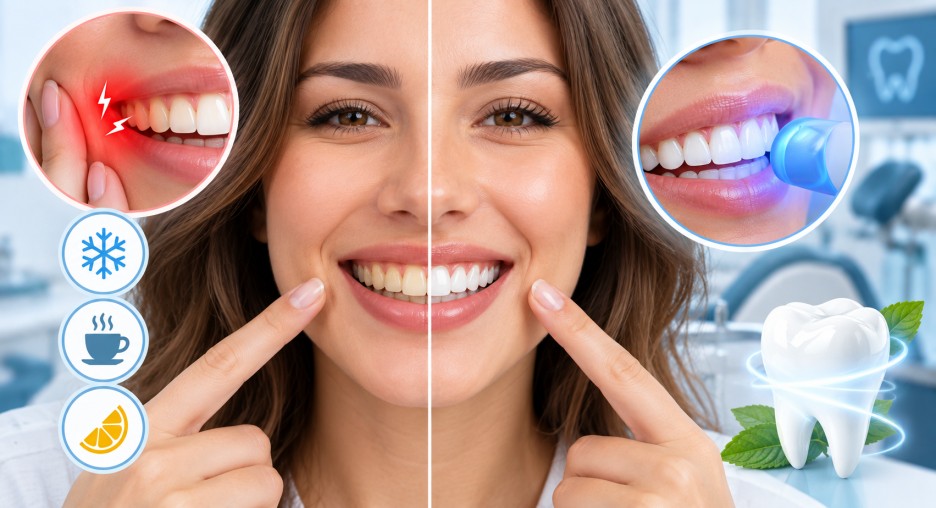
A brighter smile can boost confidence, but if your teeth already feel sensitive, the thought of whitening may make you hesitate. The good news is that many people with sensitive teeth can still whiten their smiles safely when the cause of sensitivity is identified and the treatment is properly planned.
Why Can Teeth Whitening Cause Sensitivity?
Tooth sensitivity can occur when the protective enamel becomes thinner or when the dentin underneath becomes exposed. Receding gums, worn enamel, cavities, cracks and certain dental treatments can also contribute to sensitivity.
Whitening products commonly contain peroxide-based ingredients that penetrate the tooth to break down stains. During this process, some people experience temporary sensitivity, particularly to cold drinks, hot foods or sweet items.
The level of discomfort can vary considerably from one person to another. Someone with naturally sensitive teeth may notice symptoms more quickly than someone without existing sensitivity.
This does not necessarily mean that whitening is unsafe. Instead, it may indicate that the teeth and gums need to be assessed before treatment. A dental professional can determine whether the sensitivity is caused by a treatable dental problem or is simply a natural response to whitening.
When considering teeth whitening in Mississauga, patients with existing sensitivity should discuss their concerns with a dentist before beginning treatment. This can help determine whether whitening is appropriate and which approach may be most comfortable.
Common Causes of Sensitive Teeth
Sensitivity can have several causes, including:
- Enamel erosion caused by acidic foods and drinks
- Gum recession exposing the tooth roots
- Tooth decay or cavities
- Cracked or damaged teeth
- Worn fillings
- Aggressive brushing
- Teeth grinding or clenching
- Recent dental procedures
If sensitivity is caused by decay, a crack or another dental issue, whitening should generally not be treated as the first step. Addressing the underlying problem may be more important.
How to Make Teeth Whitening More Comfortable
People with sensitive teeth do not necessarily have to give up on their goal of having a brighter smile. A dentist can recommend an approach based on the condition of the teeth, the cause of sensitivity and the desired result.
Professional Whitening vs. At-Home Products
Professional whitening provides the advantage of having a dental professional assess your oral health before treatment. Depending on your circumstances, they may recommend an in-office procedure or a customized take-home whitening option.
Over-the-counter whitening strips, gels and toothpastes can also brighten teeth, but the concentration and application method vary between products. Using whitening products too frequently or leaving them on for longer than recommended can increase the likelihood of sensitivity or gum irritation.
Professional treatment may also allow the dentist to tailor the whitening process. For patients who already experience sensitivity, a slower or more controlled approach may be preferable to aggressive whitening.
Tips for Reducing Whitening Sensitivity
If your dentist determines that whitening is suitable, a few simple measures may help make the experience more comfortable.
Use products as directed: Applying more whitening gel or using it more frequently does not necessarily produce better results. Follow the recommended instructions carefully.
Consider sensitivity toothpaste: Toothpastes formulated for sensitive teeth may help reduce discomfort for some people when used consistently.
Avoid very hot and cold foods temporarily: After whitening, teeth may be more reactive. Choosing foods and drinks closer to room temperature can help minimize discomfort.
Take breaks when appropriate: If sensitivity develops during a take-home whitening programme, speak with your dentist rather than continuing through significant discomfort.
Maintain good oral hygiene: Gentle brushing and regular flossing can help maintain healthy teeth and gums, which is important before and after whitening.
Patients interested in teeth whitening in Mississauga should also mention any previous dental treatments, gum recession or sensitivity during their consultation. This information can help the dentist determine the safest approach.
What Mississauga Patients Should Know Before Whitening
Whitening does not work equally well on every type of discolouration. It generally works best on natural tooth structure and may have limited or no effect on some dental restorations, including crowns, veneers and certain fillings.
This is important if you have visible restorations on your front teeth. Whitening the natural teeth without considering existing restorations could result in a mismatch between the shades.
A dental examination can also identify problems that may make whitening uncomfortable. Cavities, gum inflammation, exposed roots and cracked teeth may need to be treated first.
Patients should also have realistic expectations. Professional whitening can make teeth noticeably brighter, but the final shade varies depending on the original colour of the teeth, the type of staining and individual factors.
Lifestyle habits can affect how long whitening results last. Coffee, tea, red wine and tobacco products can contribute to new staining, while good oral hygiene and regular dental visits can help maintain a brighter smile.
For anyone considering teeth whitening in Mississauga, a personalized consultation is a sensible first step, especially when tooth sensitivity is already present. Rather than choosing the strongest whitening product available, it is better to choose a method that balances the desired result with your oral health and comfort.
FAQs
1. Can sensitive teeth be whitened?
Yes, many people with sensitive teeth can undergo whitening. However, the cause and severity of sensitivity should be evaluated before treatment.
2. How long does whitening sensitivity last?
Sensitivity after whitening is usually temporary. If discomfort is severe, persistent or worsening, contact your dentist for advice.
3. Is professional whitening better for sensitive teeth?
Professional whitening allows a dentist to assess your teeth and recommend an appropriate treatment approach. This can be particularly helpful for patients with existing sensitivity.
4. Can whitening damage tooth enamel?
When used appropriately, professionally supervised whitening is generally considered safe. Overusing whitening products or failing to follow instructions can increase the risk of irritation and sensitivity.
5. How can I whiten sensitive teeth safely?
Start with a dental assessment to identify the cause of sensitivity. Your dentist can then recommend an appropriate whitening method and provide guidance on reducing potential discomfort.
If you are considering teeth whitening in Mississauga but are concerned about sensitivity, contact Afflux Dentistry to discuss your smile goals and find out which whitening approach may be suitable for your teeth.