
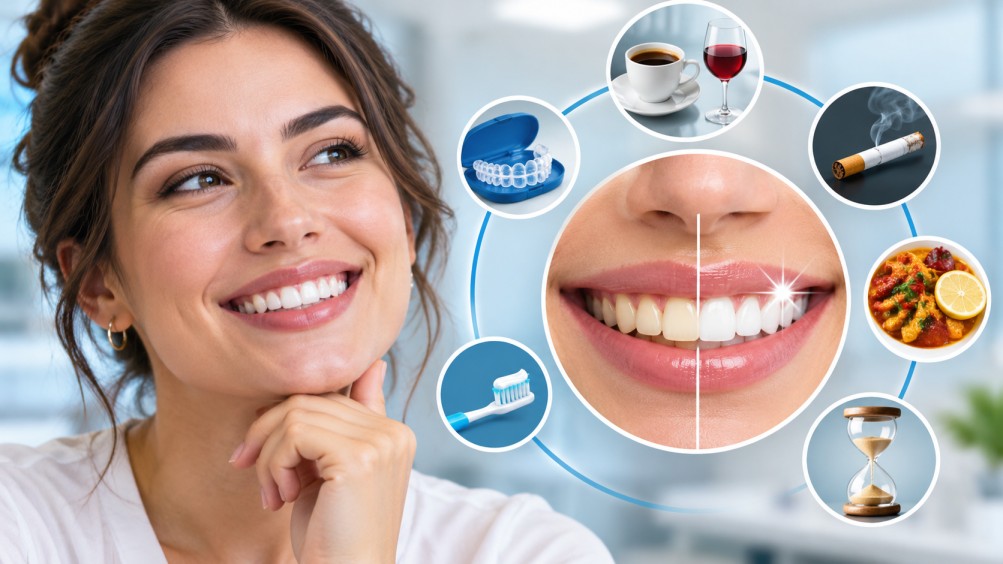
Several everyday habits and oral health factors can influence how long your teeth remain bright after professional whitening.
1. Your Diet and Drinking Habits
Coffee, tea, red wine and dark-coloured soft drinks can gradually stain tooth enamel. Foods such as berries, tomato-based sauces and certain richly coloured curries may also contribute to surface staining over time.
You don’t necessarily need to avoid these foods and drinks completely. Instead, consider a few practical habits:
- Rinse your mouth with water after consuming staining foods or beverages.
- Drink water regularly throughout the day.
- Avoid sipping staining drinks continuously over several hours.
- Maintain a balanced diet and limit sugary drinks to support overall oral health.
2. Smoking and Tobacco Use
Tobacco products can cause noticeable yellow or brown stains on teeth. Smoking can also affect gum health and increase the risk of other oral health problems. Avoiding tobacco can help preserve your whitening results while supporting healthier gums and teeth.
3. Oral Hygiene Habits
Brushing twice daily with fluoride toothpaste and cleaning between your teeth every day helps remove plaque and reduce the accumulation of surface stains. Regular dental cleanings can also remove deposits that ordinary brushing cannot eliminate.
However, brushing harder doesn’t make your teeth whiter. Excessive pressure or abrasive products may damage enamel or irritate your gums. Use a soft-bristled toothbrush and follow your dentist’s advice about whitening toothpaste or other maintenance products.
4. Your Natural Tooth Colour and Enamel
Everyone’s teeth respond differently to whitening. Genetics, age, enamel thickness and the type of stains present can affect the outcome. Whitening may be less effective on certain internal stains caused by trauma, medication or developmental conditions.
Your dentist can explain whether bleaching is likely to help or whether another cosmetic option would be more appropriate.
5. Touch-Up Treatments
Some people benefit from occasional touch-ups to maintain their preferred shade. The timing depends on how quickly stains return and the original treatment used. Your dentist may recommend custom whitening trays or another suitable maintenance approach.
Avoid repeating whitening treatments too frequently or using multiple products without guidance, as this may cause temporary sensitivity or gum irritation. A personalized maintenance plan is generally more useful than following a fixed schedule.
How to Keep Your Smile Brighter for Longer
Maintaining whitening results doesn’t require an elaborate routine. A few consistent habits can make a meaningful difference.
First, follow your dentist’s aftercare instructions. Your teeth may experience temporary sensitivity following treatment, so use products recommended by your dental professional if needed. If sensitivity persists or becomes severe, arrange a dental assessment rather than continuing to whiten your teeth.
Second, schedule regular dental checkups and professional cleanings as recommended. These appointments allow your dental team to monitor your oral health, remove surface deposits and identify potential problems early.
Third, be cautious with over-the-counter whitening products. Whitening strips and toothpastes vary in their ingredients and effectiveness. Using products that are too abrasive or combining several bleaching treatments may increase sensitivity without providing better results.
Finally, remember that a healthy smile doesn’t need to be perfectly white. Natural teeth vary in shade, and the goal of whitening is to achieve a result that suits your preferences while protecting your oral health.
If you’re exploring teeth whitening in Mississauga, speaking with a dental professional can help you understand which treatment suits your teeth and how to maintain the results safely. The right approach depends on your oral health, the type of staining and the level of whitening you want to achieve.
Frequently Asked Questions
1. Does professional teeth whitening last longer than home whitening?
Professional treatment can provide more noticeable results in some cases, but longevity depends on the product, application method and your daily habits. Dentist-supervised home whitening can also produce lasting results.
2. How soon can teeth become stained again after whitening?
Some surface staining may return within a few months, particularly if you frequently consume coffee, tea or tobacco products. The timing varies between individuals.
3. Can I whiten my teeth every month?
Monthly whitening is not necessary for everyone and may increase sensitivity if performed too frequently. Ask your dentist to recommend an appropriate schedule based on your treatment and oral health.
4. Does professional teeth whitening damage enamel?
When performed correctly with suitable products, professional whitening is generally considered safe for teeth. Temporary sensitivity and gum irritation can occur, particularly with excessive or improper use.
5. Is professional teeth whitening suitable for everyone?
Not always. People with untreated cavities, gum disease or certain types of tooth discolouration may need other treatment first. A dental examination helps establish whether whitening is appropriate.
Ready to refresh your smile? Contact Afflux Dentistry to discuss your whitening goals, explore suitable treatment options and receive guidance on maintaining a brighter smile. A consultation can help you take the next step towards a result that looks natural and feels right for you.